News
- Marsilius Fellowship for Adriana HanulíkováWe are pleased to announce that Prof. Dr. Adriana Hanulíková has been awarded a Marsilius Fellowship for the 2026/27 funding period. Together with Prof. Dr. Bastian Schiller, she will lead the interdisciplinary project “Social Closeness to Machines? Linguistic, Psychological, and Neural Mechanisms of Human–Robot Interaction.”
- Managing Director at the IDFDuring the 2026/2027 academic year, Adriana Hanulíková will serve as Managing Director of the Institute of German as a Foreign Language Philology (IDF). She has also been appointed to the Advisory Board of Heidelberg University Publishing (heiUP). We wish her every success in these new roles and look forward to the contributions she will make.
- SoLEARN Workshop brings international researchers together in HeidelbergOn 27 July 2026, the SMARTcognition Lab at Heidelberg University hosted the international 4EU+ workshop “Gaze, Communication, and Interaction: Interdisciplinary Perspectives on Social Feedback in Digital Contexts.” Researchers from Heidelberg, Geneva, and Prague exchanged perspectives on gaze, social feedback, and learning in digital environments, covering topics ranging from social robotics and virtual agents to neuroscience, psychology, and… Read more: SoLEARN Workshop brings international researchers together in Heidelberg
- SMARTcognition Lab featured at HAI Alumni AnniversaryThe SMARTcognition Lab participated in the 30th anniversary celebration of Heidelberg Alumni International (HAI). As part of an IDF Lunch Talk, Prof. Dr. Adriana Hanulíková introduced the SMARTcognition Lab and presented current research on language learning in interaction with robots, AI, and different social contexts. The event gave alumni the opportunity to learn about ongoing research and recent… Read more: SMARTcognition Lab featured at HAI Alumni Anniversary
- Late-breaking work accepted at RO-MAN 2026Our late-breaking work, Disfluencies in robot- and human-directed narration: Preliminary findings on partner effects and temperamental shyness, by Nils F. Tolksdorf and Adriana Hanulíková, has been accepted for presentation at IEEE RO-MAN 2026 in Kitakyushu, Japan. The study examines how adults narrate stories to a social robot compared with a human partner, focusing on filled and… Read more: Late-breaking work accepted at RO-MAN 2026
Research at the SMARTcognition Lab
The SMARTcognition Lab at the Institute of German as a Foreign Language Philology (IDF) encompasses the Eyetracking Lab (HULC Lab) and the SMART Lab. Together, we investigate how people perceive, learn, use, and evaluate language — taking into account social, regional, and linguistic variation, interactions with robots and AI, and a range of contextual conditions. Our work focuses on the cognitive processes involved, individual differences, and the influence of social networks.
Research Areas
01
Speech Perception in Diverse Contexts
We investigate how people perceive and evaluate spoken language across social, regional, and linguistic variation. Our focus includes monolingual and bilingual individuals as well as the processing of regional and foreign-language accents. We also examine how familiarity, cognitive demands, and social attributions shape speech perception.
02
Robots as Social Learning Partners
We explore how social robots can support learning processes as interactive partners, foster language development, and help investigate cognitive processes under controlled conditions. Our work also addresses ethical and child-centered aspects of human–robot interaction.
03
Individual Differences and Temperament
We examine how individual behavior and language abilities influence children’s learning processes in social interactions. We investigate how communication behavior and learning strategies change when children interact with familiar or unfamiliar partners, or when the learning context shifts.
04
Linguistic Variation and Social Networks
We study the characteristics and dynamics of an individual’s social networks in relation to their linguistic and communicative development, based on the perspective that language is acquired through social relationships and interaction.
Current Projects
P1
ECHO

Ethics in Child–Robot Interaction: Investigating and Co-Designing Role Configurations in Educational Settings
Social robots are increasingly being deployed in educational contexts — particularly with children as a vulnerable group. The ECHO project examines the ethical implications of social role configurations (e.g., learning partner, teacher, learner) and co-designs guidelines for responsible, human-centered AI applications in education.
P2
SoLEARN
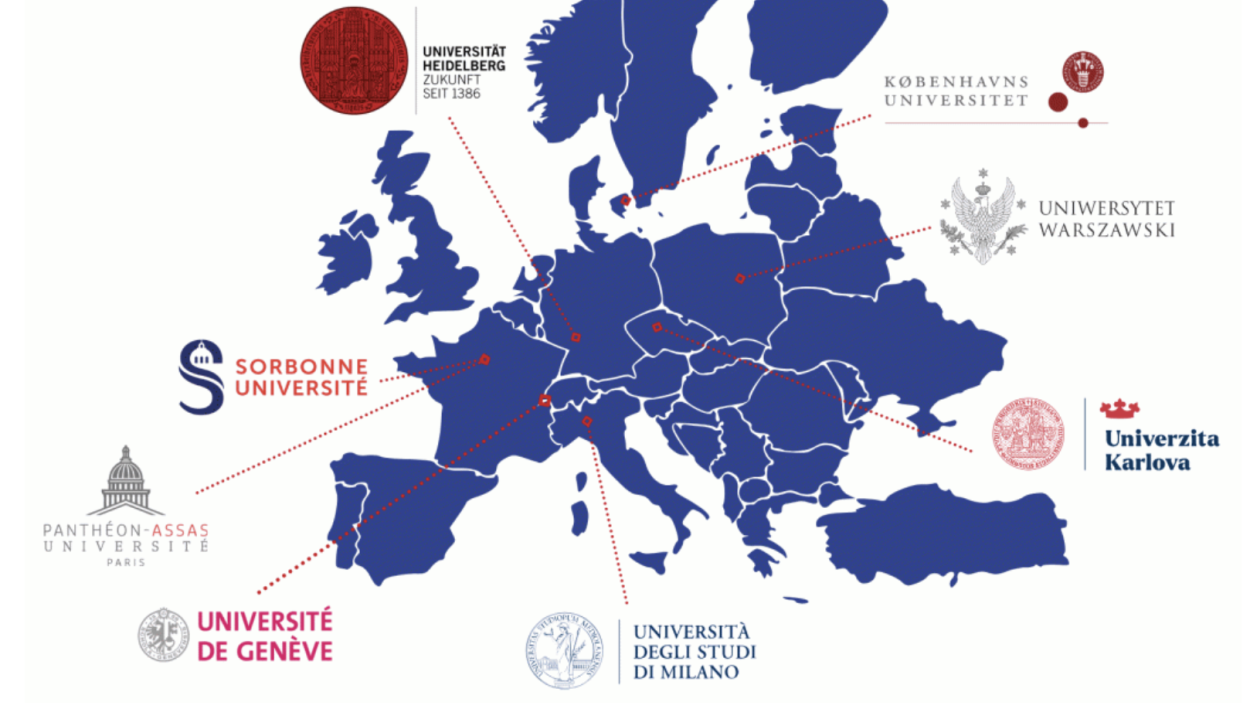
SoLEARN – 4EU+ European University Alliance
As part of the 4EU+ European University Alliance, SoLEARN investigates linguistic and social learning in European educational contexts. The project connects partner universities and builds a shared research infrastructure for multilingual learning.
P3
Lectal Coherence

Lectal Coherence: Empirical and methodological cross-disciplinary perspectives
This project seeks to clarify the dynamic balance between lectal coherence, linguistic variability, and language change: while the former is essential for structural integrity and social orientation, the latter two enable adaptation and differentiation. To this end, a group of researchers from diverse disciplines and universities, specialising in various fields of linguistics, have collaborated to address this issue. The researchers involved in this project hail from a diverse range of academic backgrounds, including but not limited to the fields of computational linguistics, machine learning and artificial intelligence research, quantitative linguistics, phonetics and speech processing, psycholinguistics, contact linguistics, dialectology, and variationist sociolinguistics.
Current publications
2026
Experience and personality modulate pupillary responses during real-time processing of within-language accent shifts
Hanulíková, A., Gastman, F., & Schimke, S. – Scientific Reports
Speech perception Accent Cognition2026
Robot speech: How variability matters for child–robot interactions
Hanulíková, A., Tolksdorf, N. F., & Kapp, S. – Frontiers in Robotics and AI
HRI Speech Children2026
The relation between children’s shyness and their contingent dialogical actions when reacting to a social robot’s instructions
Tykhonenko, V., Tolksdorf, N. F., & Rohlfing, K. J. — Philosophical Transactions B
HRI Children Shyness2025
Grammatical gender in Slovak word production: An event-related potential study
Stolle, S. I., Hanulíková, A., & Schiller, N. O. — Language, Cognition and Neuroscience
Grammatik EEG CognitionTeam
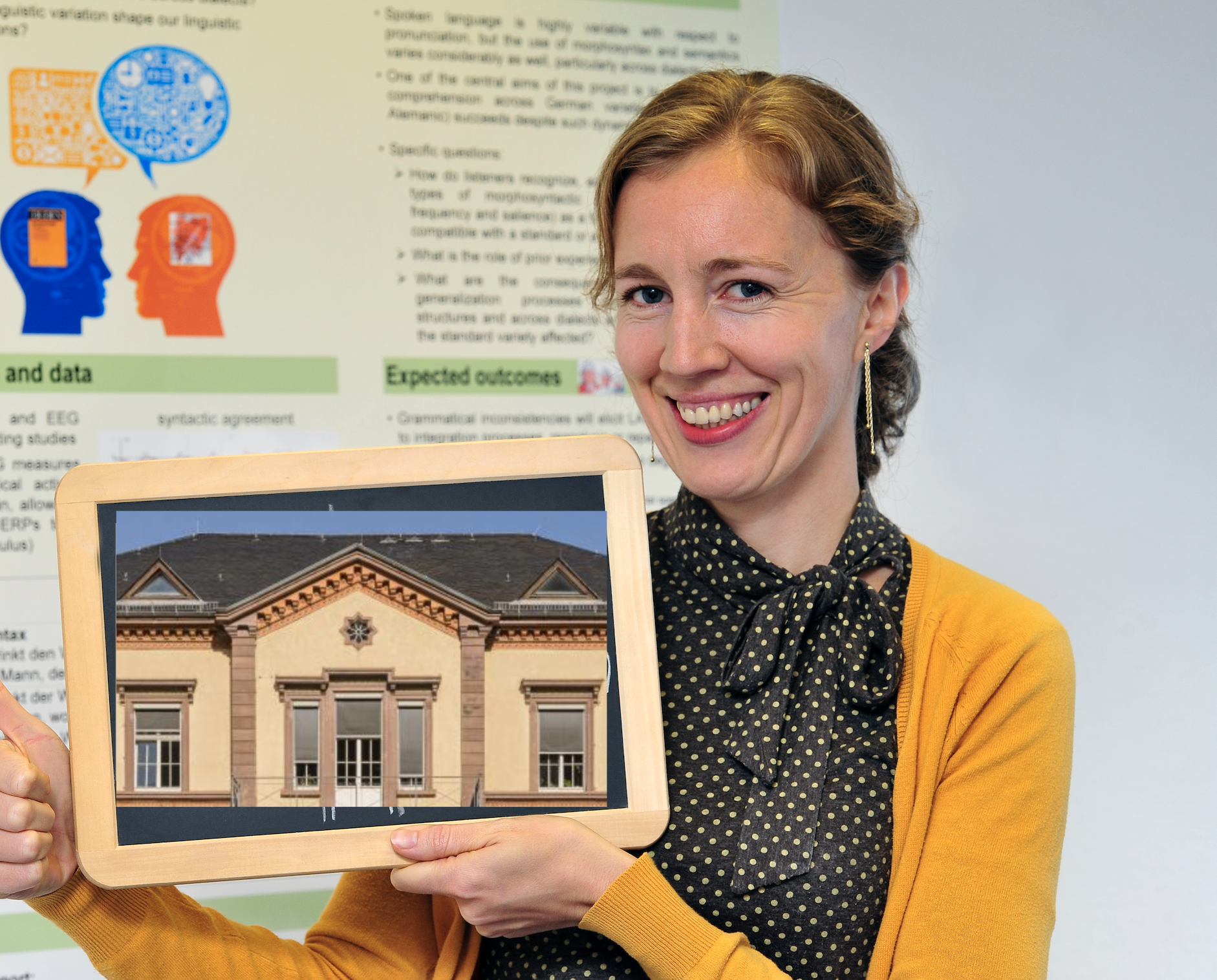
Prof. Dr. Adriana Hanulíková
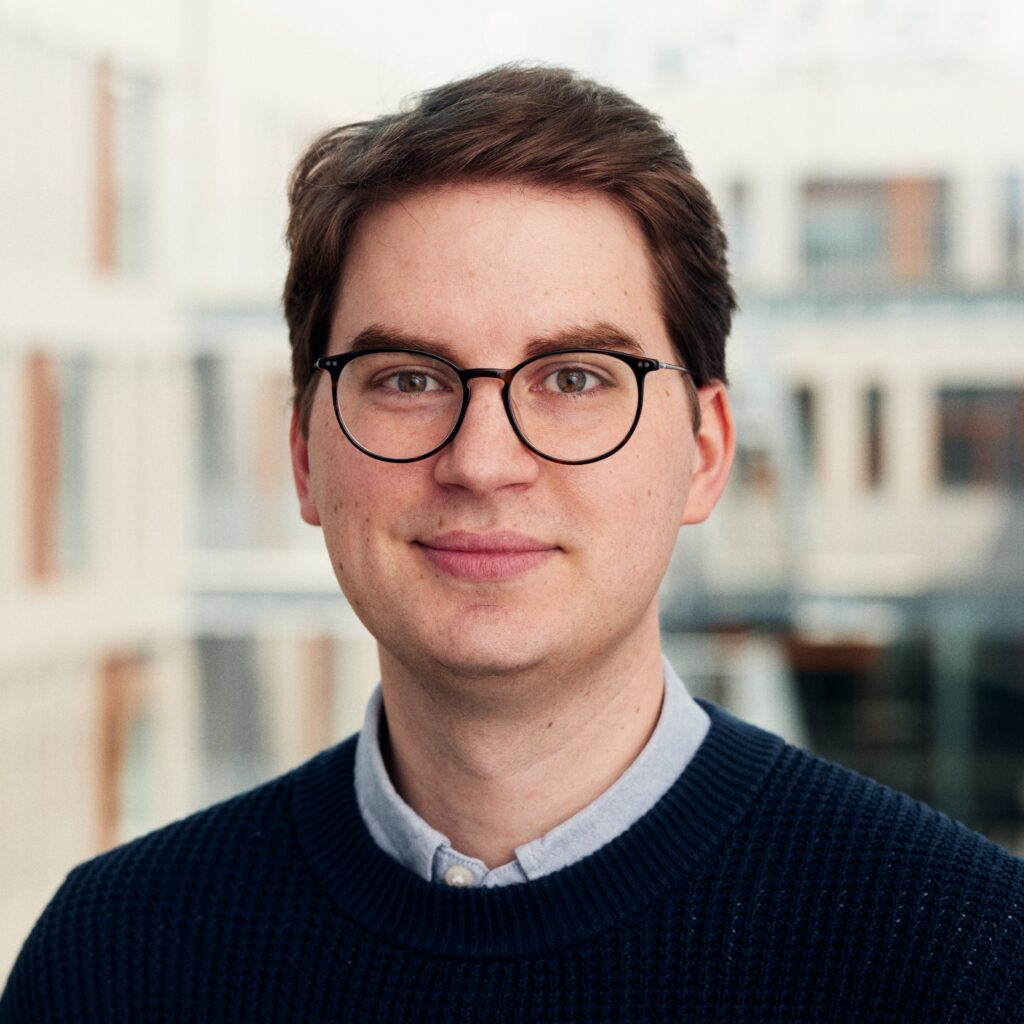
Dr. Nils Tolkdorf

Sarah Kapp

Hao Cui

Sandra Bogdadi

Ruiyun Wang

Yutong He

Christoph Jörger

Mohammed Arsh

Valeriia Didushok

Odette Lehman
Contact
Get in touch
Whether you are interested in our research, would like to explore a collaboration, or wish to participate in a study, we would be happy to hear from you.
Address
Institute of German as a Foreign Language Philology
Heidelberg University
Plöck 55
69117 Heidelberg