

News
SMARTcognition Lab participates in Girls’ Day 2026
On April 23, 2026, the SMARTcognition Lab will participate in Girls’ Day. In the workshop “A Day in the SMARTcognition Lab – Being a Researcher in Social Robotics, AI, and Multilingualism,” students will gain insights into our current research.
Participants will explore our lab environment, learn about research at the…
New Laboratory Technician Position Open
Interested in supporting cutting-edge research at the intersection of language, cognition, and technology? We are currently looking to fill a laboratory technician position to strengthen our team. The role involves technical support for ongoing research projects as well as the maintenance and further development of our laboratory infrastructure.
Further details about…
Talk on Multilingualism at the European Parliament
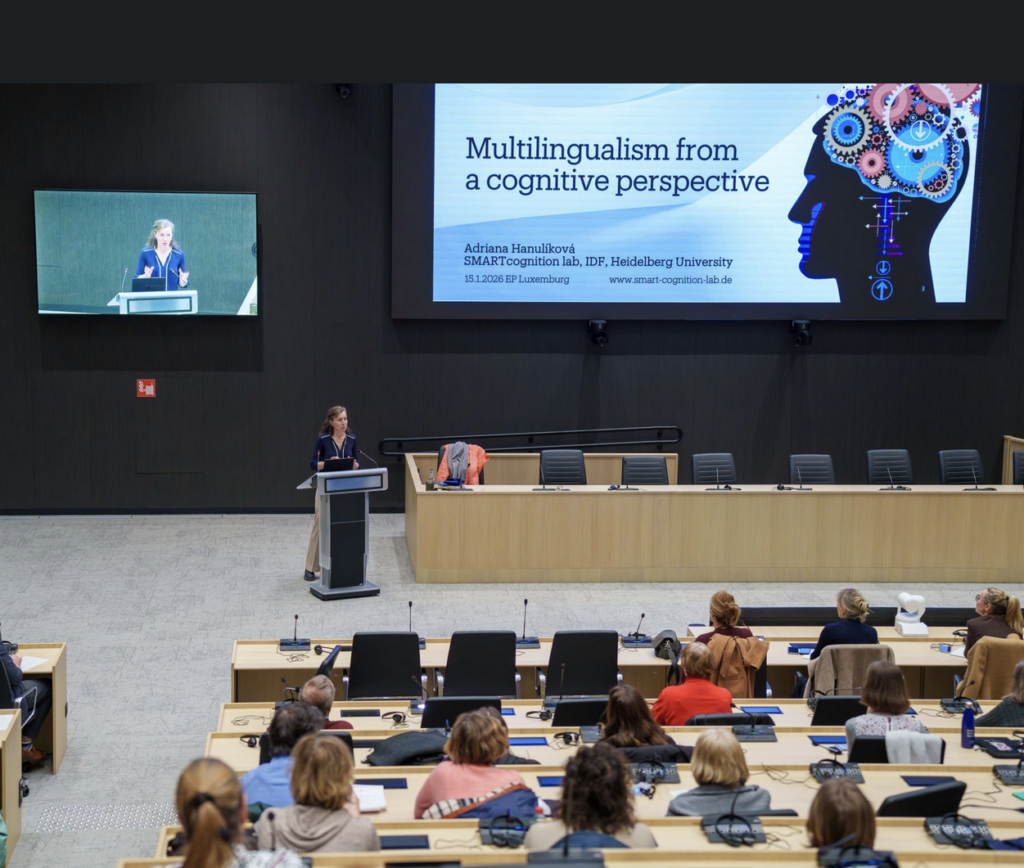
Prof. Adriana Hanulíková recently gave a talk at the European Parliament in Luxembourg City entitled “Multilingualism from a cognitive perspective.” Her presentation addressed how multilingualism influences cognitive abilities and how a second language can affect the processing of a first language, and whether decision-making differs…
Publication on Speech Variability in Child–Robot Interaction
In a recent article published in Frontiers in Robotics and AI, titled “Robot speech: how variability matters for child–robot interactions” Adriana Hanulíková, Nils Tolksdorf, and Sarah Kapp discuss the relevance of speech variability for interaction, learning, and ethical transparency in the use of social robots with children.
Lab presentation & winter gathering at the IDF
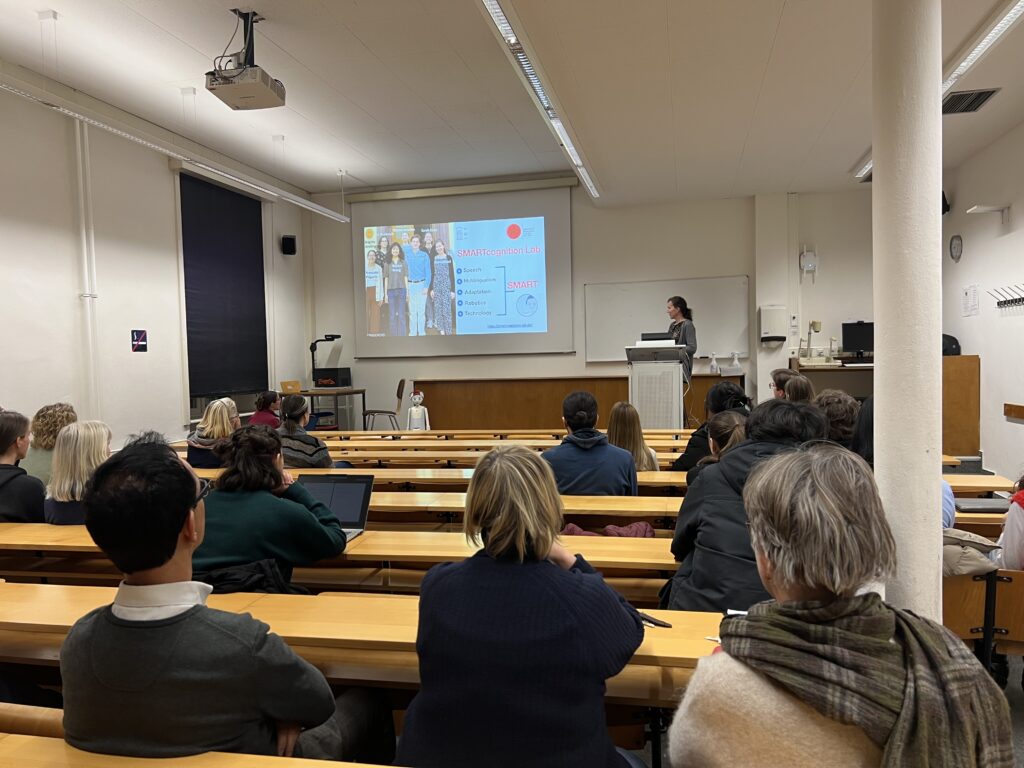
We were happy to present the SMARTcognitionLab at the IDF and share snapshots of our ongoing work. Afterwards, we were delighted to help organize this year’s IDF winter gathering—thank you to all colleagues for the inspiring conversations, exchange, and warm atmosphere!
Ethics-Seed-Funding (Camilla und Georg Jellinek Center for Ethics, Uni Heidelberg)
Our project ECHO (Ethics in Child–Robot Interaction; PIs: Nils Tolksdorf, Adriana Hanulíková) has received seed funding from Heidelberg University’s Camilla and Georg Jellinek Center for Ethics. We examine how social roles of socially assistive robots (e.g., tutor, peer) influenve children’s interactions, relationships, and normative expectations—and we advance ethically informed role…