Configuring Robot Roles for Children:
Developmental, Communicative, and Ethical
Dimensions Across Contexts and Domains
July 2nd, 2026, London
in conjunction with the 18th International Conference on Social Robotics (ICSR)
Please note: The workshop is open to everyone. Prior registration is not required to join the workshop.
What’s the workshop about?
Social roles are a fundamental mechanism through which humans structure interpersonal encounters—and people extend these role-based expectations to artificial agents as well. As socially assistive robots become more prevalent, the roles they are designed to enact (e.g., tutor, peer, companion, novice) shape how users interact with them and how learning processes unfold. This is particularly consequential for children and adolescents: expectations about authority, care, and reliability emerge early and influence how young users interpret a robot’s actions, participate in interaction, and attribute knowledge, responsibility, and social reciprocity.
At the same time, social roles are not static. They are dialogically and affectively negotiated and may need to shift dynamically over time and across contexts. A robot acting as a tutor structures interaction through guidance, while a peer-like robot may co-explore, request support, or display uncertainty. These configurations influence activity design, dialogue structure, and the linguistic and embodied means through which meaning is co-constructed. Despite growing interest and many implicit role implementations in robot behavior and appearance, the field still lacks a systematic understanding of how social roles can be designed, adapted, and evaluated across developmental stages, contexts, cultures, and interaction goals—along with their dialogic, developmental, and ethical implications (e.g., learning, trust, moral attribution, and over-trust).
This workshop brings together researchers and practitioners from HRI, developmental psychology, education, linguistics, interaction design, and AI ethics to explore innovative role designs, dynamic role enactment, and developmentally responsive approaches for meaningful, ethical, and effective child–robot interaction.
Key Information
Workshop Date
July 2nd, 2026
Workshop Time
09:00 – 12:00
Workshop Location
Workshop Room 2, University of London, Senate House Building
Keynote Speaker
Aditi Kothiyal (Indian Institute of Technology Gandhinagar)
Aditi Kothiyal is an assistant teaching professor at the Indian Institute of Technology Gandhinagar affiliated with the Center for Creative Learning and my research lies at the intersection of STEM education, learning sciences and educational technologies. Inspired by recent research in cognitive science that suggests that all cognition is embodied, embedded, enactive and extended, she studies how learning by physically doing and making physical objects (ranging from simple plastic or wooden toys to electric cars to educational robots) supports learning of STEM concepts, disciplinary practices and attitudes, and leads to the emergence of STEM identities.

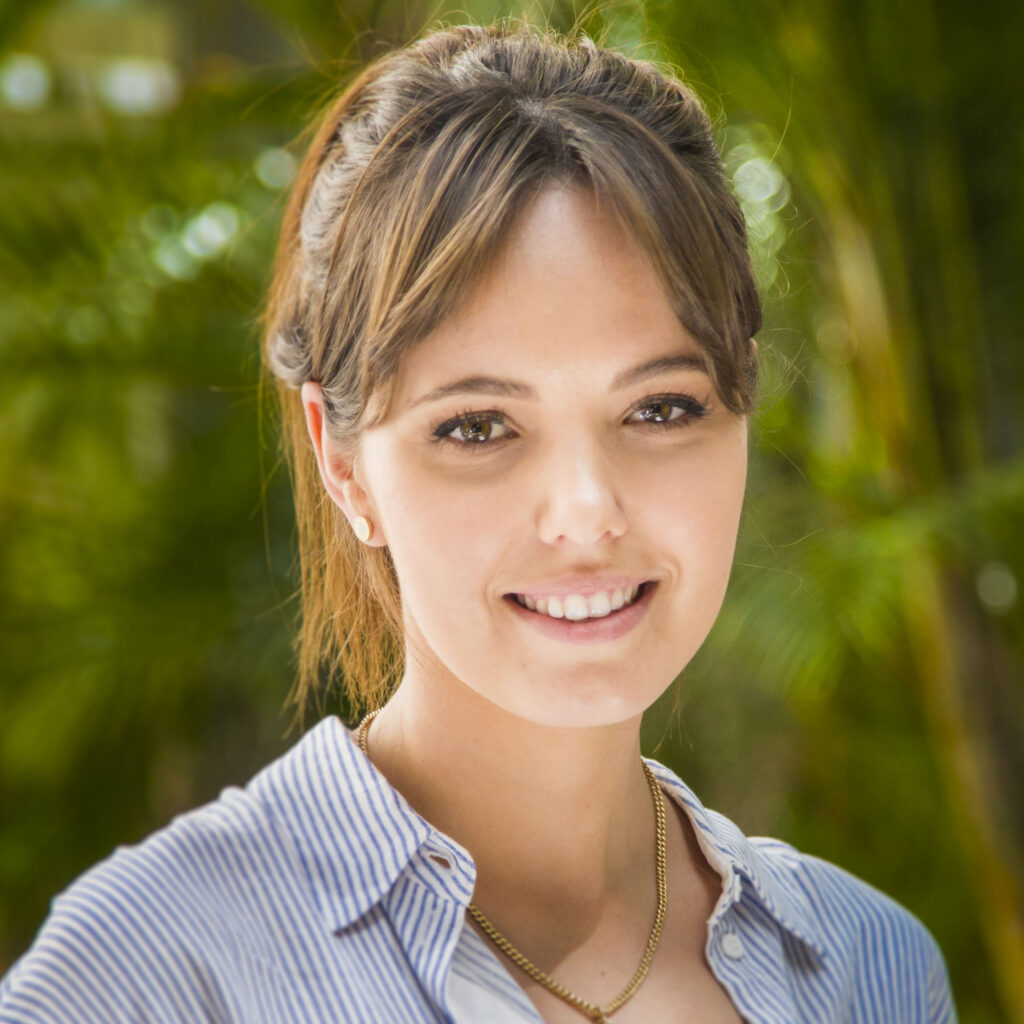
Kristyn Sommer (Griffith University, Australia)
Kristyn Sommer is a developmental scientist and science communicator based in Australia, researching how children learn and engage with social agents across contexts. Her work examines child–robot interaction, individual variability in engagement, and the design of supportive, transparent roles that foster learning and trust. She collaborates with families, educators, and interdisciplinary teams to develop inclusive methods and practical guidance for responsible deployment of interactive technologies in childhood settings.
Provisional Workshop Schedule
| Time | Activity | Details |
|---|---|---|
| 09:00 | Welcome | Opening and overview of the workshop goals |
| 09:15 | Icebreaker | Short interactive activity to introduce participants and spark initial connections |
| 09:30 | Keynote I and Q&A: Aditi Kothiyal | Invited talk, followed by interactive discussion |
| 10:15 | Keynote II and Q&A: Kristyn Sommer | Second invited talk offering a complementary perspective, followed by interactive discussion |
| 11:00 | Coffee break | Informal networking before the activity |
| 11:10 | Breakout Group Discussions | Small-group discussions on key challenges in designing roles of robots for and with children |
| 11:45 | Reflections & Take-aways | Table summaries and collective synthesis |
| 11:55 | Organisation committee conclusions | Closing remarks and practical wrap-up |
| 12:00 | End of the workshop |
Objectives
- Advance theory and evidence on how role design influences interaction dynamics, learning processes, and trust, and in child–robot interaction.
- Develop developmentally responsive role designs, including how roles are constructed via dialogue and multimodal behavior (gaze, gesture, timing, stance).
- Explore dynamic role enactment, role negotiation, and role transitions over time, including longitudinal perspectives.
- Address ethical and normative implications of roles (e.g., care expectations, accountability, privacy, stereotypes, and over-trust).
- Share and refine methods for measuring role uptake and effectiveness in dyadic and polyadic/group settings.
Topics
- Effects of social role framing (peer/teacher/novice/companion) on interaction and learning
- Developmentally appropriate role designs in pedagogical settings
- Co-designing role configurations with children, educators, and caregivers
- Dialogue design and multimodal cues that implement and co-construct roles
- Cross-cultural perspectives on robot roles & perceptions
- Moral expectations tied to robot roles (care, reliability, privacy, responsibility)
- Role dynamics in triads and polyadic settings (robot–child–teacher; peer groups)
- Longitudinal work on evolving role adaptations and perceptions over time
- Transparency and explanation strategies for robot behavior and roles
- Ethical implications (stereotypes; engagement vs. over-trust)
- Methodological approaches to measuring role uptake and role effectiveness
Organizers



Nils Tolksdorf
Adriana Hanulikova
Sarah Kapp
Nils is a researcher at Heidelberg University, SMARTcognition Lab. His work sits at the intersection of psycholinguistics, child development, and human–robot interaction, with a particular focus on how social robots can support children’s communication and learning. A core theme of his research is capturing developmental variability (e.g., shyness/temperament) and translating these insights into more adaptive, ethically grounded robot behaviors and assessment methods.
Adriana is a Professor at Heidelberg University and leads the SMARTcognition Lab and the HULC Lab. Her research examines language processing across the lifespan and how children and adults perceive and adapt to socially variable input, including accents, dialects, and synthetic or robot-produced speech. She is an expert in experimental psycholinguistics, multilingualism, and interactive communication. Her recent work advances interdisciplinary research on social robotics, language learning, and ethical human–AI interaction.
Sarah is a Ph.D. student at Heidelberg University. Her research examines how properties of individuals’ social networks shape their language skills, with an emphasis on individual and contextual variability. With a background cognitive science, she investigates how people adapt to linguistic variation, including in interactions with AI-based systems such as social robots.